A rugged pair of philanthropists
The Frows and the Working Class Movement Library by David Gerard
This article was first published in The Library Review Vol. 46 No. 6 (1997)
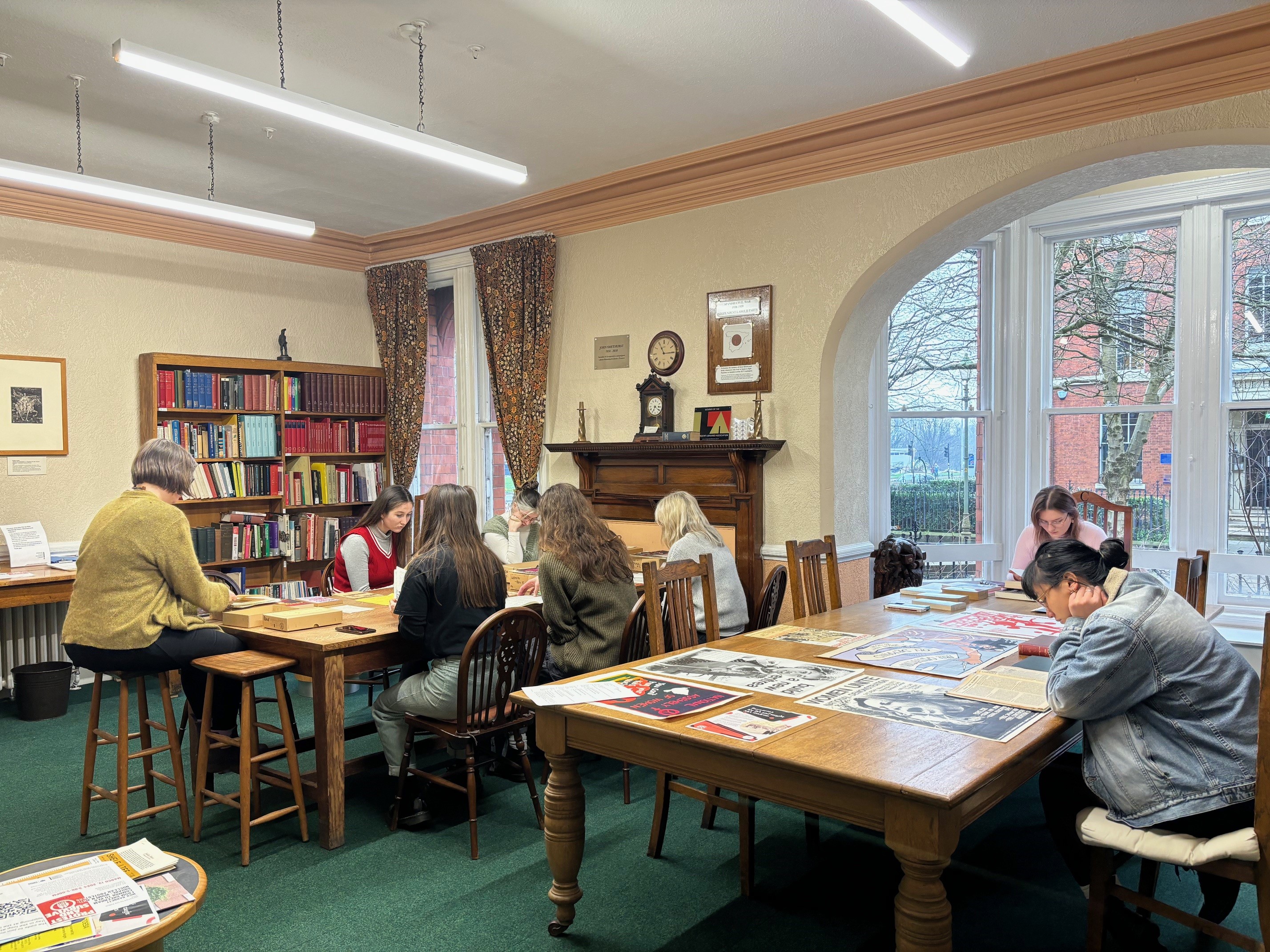
Not many libraries offer a cup of tea to their clients; or have the time (or inclination?) to enter into an enriching dialogue with users about their reasons for coming to the library, or their research interests, their background or the nature of their personal involvement with the subject at issue. Not many libraries have the time to suggest further reading or lateral lines of enquiry. But then, few libraries have behind them the philanthropic impulse that created this one, somewhat clumsily called the Working Class Movement Library.
The spirit which energises it derives from a tradition now almost extinct - it has sublimated into more sophisticated structures - which educated and inspired generations of the culturally dispossessed: the radical tradition of self-help. It is traceable back to the lecture halls, reading circles, Jacobin clubs, halls of science, coffee rooms and the first trade union meetings, it has affinities with the tradition of street literature, the ballads, dissenting oratory, the warmth of communal effort by the have-nots and aspirations towards a better world, a fairer society. The library created by Edmund and Ruth Frow is a contemporary symbol of that tradition, preserving the memory of what has gone before, but more importantly offering in abundance the resources for future reconstruction and rethinking about politics and social wellbeing. The atmosphere is that of a salon, of a Socratic symposium.
Housed in Jubilee House, an elegant and commodious ex-nurses' home, it is this year celebrating its tenth anniversary therein, though its origins go back much further in time. The building is on the busy six-lane highway trans-secting Salford known as The Crescent, and is part of a complex; opposite is the green and elevated campus of Salford University which embraces Peel Park and the central public library, the first free library opened after the 1850 Act, together with the adjacent art gallery which houses the most considerable Lowry collection, soon to be rehoused in magnificent premises at Salford Quays. Alongside Jubilee House is Viewpoint the North West's premier photographic gallery exhibiting the best creative contemporary photography. The physicist James Prescott Joule of Joule's Law, lived in the adjacent house, the end of a fine Georgian terrace. The whole area is thus a hub of cultural enterprise, the ideal site for the kind of library the Frows have bequeathed to the city of Salford - and the world. Only a mile away is Salford Town MI where in 1931 Eddie Frow-as arrested and beaten up by the police while taking part in a demonstration organized by the unemployed.
It was in 1953 that Edmund (Eddie) Frow met Ruth Haines at a study weekend, the subject, Labour History. Not only did each of them share a common intellectual interest in that subject but significantly, a common passion for book collecting-, they discovered at that weekend that their joint collections already totalled 3,000. Ruth was a teacher (English and history), Eddie was with an electrical company; both were trade union activists, she in the National Union of Teachers, he in the Amalgamated Engineering Union. Later in life Eddie was a toolmaker with Metro-Vickers at Old Trafford (Manchester) and Manchester District Secretary of the AEU, while Ruth ended her career as deputy head of a local comprehensive school. Eddie's books were mainly political history, Ruth's history and English literature; so when Eddie visited her home he exclaimed 'these books complement mine!" The mutual obsession bound them together indissolubly for life and soon they set up their joint home in a flat in Didsbury, Manchester. Common temperament common interest in the politics of radicalism, above all a passion for books, was the catalyst. Their partnership and the contents of their bookcases were to prove a legacy of lasting value and an incitement to official action they could not have foreseen.
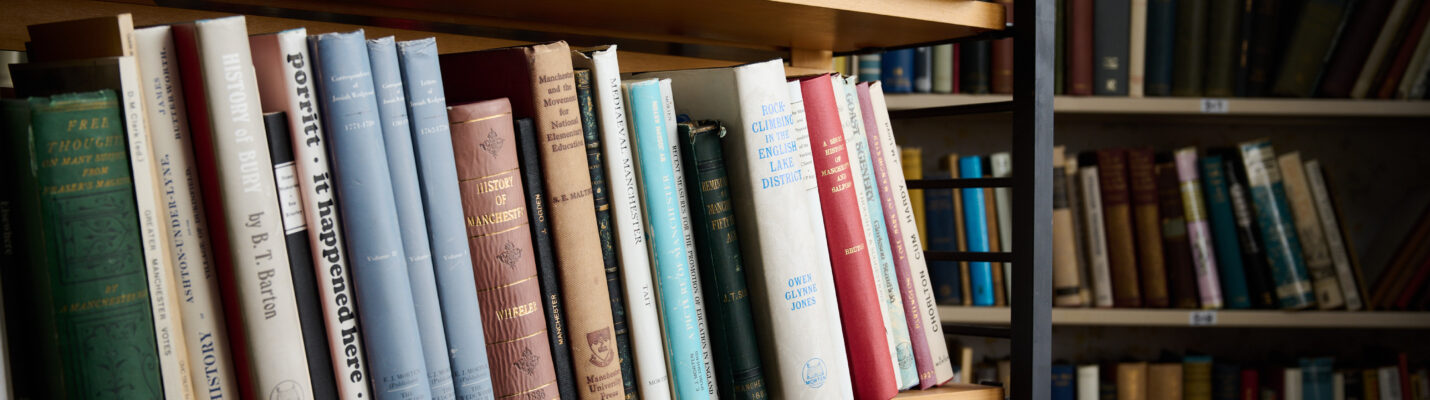
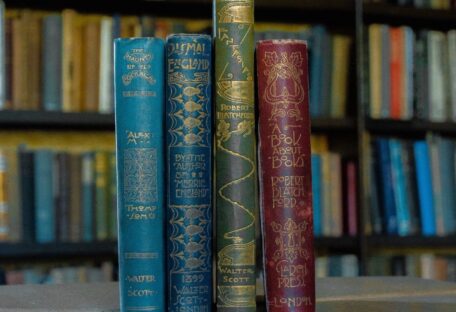
At first they kept their books separate. As one of them put it: 'It takes time for a communion of interests to emerge, and the first years of marriage are inevitably fraught with problems of identity'. A year later, in 1956, the books were already outgrowing the cramped flat and they moved to the address which was to establish their reputation, 111 Kings Road, Old Trafford, a semi-detached house with more rooms to fill with booty now being acquired at an increasing rate. Oak shelving was fitted behind glass, later removed as space became an acute problem allowing no room for extravagant fittings. Gradually every room save bathroom and kitchen filled as the collection amounted to 10,000 items, not only books but related material: prints, posters, banners, ceramics, badges, memorabilia.
The whole enterprise was rooted in political conviction, the need to understand - with a view to changing - the history and present condition of society, hence the aim to assemble a collection not only of printed books but of every class of ephemera illustrating the history of the labour movement in its widest aspects - political, social, literary, biographical, artistic - over the past 200 years when modern political consciousness first emerged among the urban and rural working class, initially inspired by revolutionary action in France. To express it another way: the library is intended to represent the ideals, aspirations, trials (in all senses) and tribulations of ordinary working people, so much of which has been neglected and undocumented in formal histories. In short, a history of the common man and woman who were the makers of the wealth of nations so admired and tendentiously defined by Adam Smith, the wealth which subsequently accounted for the commercial expansion and influence of the European Powers.
In search of this material the Frows travelled the length and breadth of the UK in their leisure time during their working lives. It was both vocation and vacation. First in a small 1937 Morris van, later in a motor caravan, they would camp outside any town which boasted one or more bookshops, ransacking them during the morning then retiring with the day's haul to read their acquisitions in some fair corner of the nearby countryside. When the van was full they would return to Manchester in the evening.
The house in King's Road gradually filled as the original flat had done, and as knowledge of its contents grew, largely by word of mouth, so did the hospitality. Tea was added to sympathy, in some cases meals, and if the visitor had come from far afield even a bed for the night. For more than 20 years King's Road was enriched with an increase of material and frequented by a growing clientele of scholars and students from home and abroad as its fame spread. A new initiative was soon imperative. The earliest official recognition of the value of this future legacy was in 1969 when a Charitable Trust was created and so assurance of permanence, a condition essential to its preservation and continuing utility; it could no longer be left to the goodwill of its founders. The preamble to the Trust document states that 'The 'Working Class Movement Library, Manchester', was established to promote the education of the public in relation to the history of the working class movement by facilitating and promoting research and dissemination of all aspects of such history'. With a full house, another more pressing move was essential, to more ample accommodation under public control, meriting recognition as a national resource open to all who could benefit from it.
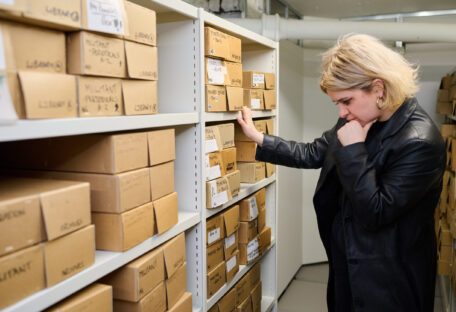
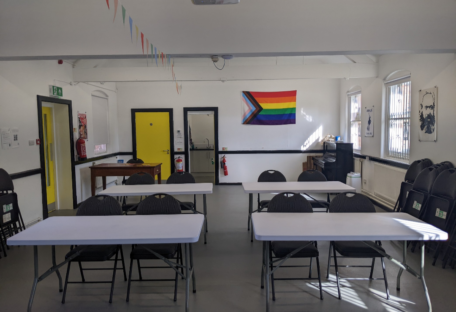
In 1987 the trajectory which had begun in the Didsbury flat ended in the present quarters, the commodious late Victorian (1896) redbrick structure of three storeys, offering the space which could properly exploit the treasury. Around the roomy entrance foyer and its handsome staircase are reading rooms, an exhibition room, a seminar room, a browsing collection, stack provision beneath in a series of cellars, and an annexe for conferences. Originally a flat was provided for Eddie and Ruth in the middle floor but they have now left to occupy a bungalow, not far away, thus releasing more space for future growth, a comfortable staff room and a computer room. A fully-fledged library of course needs more than stock and premises: it needs a competent professional staff, and in 1987 Alain Kahan, Helen Bowyer and Pat Arnison were appointed, Alain Kahan as librarian in charge, and Paul Connell as caretaker. The new dispensation was blessed with an official opening by Frank Allaun, the local Member of Parliament, on 6 November 1987. Public spending has suffered painful shrinkage for many years and the original staff shrank to one, Alain alone, with help from volunteers.
In 1996 an injection of funds from that ultimate symbol of national acquisitiveness, the Lottery, led to restoration of staffing: an assistant Ray Walker, for the immediate future and on a three-year contract Joanne Mather from Salford University Library, appointed to prepare the catalogue records for automation with Talis using the BLCMP database. TalisWeb will thus enable researchers throughout the world to look at the catalogue on the World Wide Web; banners, prints and other matter of visual importance have been photographed so that graphical images can be put into the Web, and full scanning of pamphlets will follow. In Alain Kahan's words: 'The computer is potentially a very democratic weapon allowing everyone access without political, state, wealth or class restrictions'. With more than 30,000 items of such variety to catalogue the task is onerous but exciting, and the result will be its own reward: worldwide publicizing of the collections painstakingly and lovingly assembled by the two founders and today regularly enhanced by deposits from individuals and institutions, notably the trade unions.
One of the provisions of the Trust charter was that the library may receive material from any available source and in pursuit of its aims arrange for lectures based on its material, and organize film shows, meetings and conferences to be held in the library. All this is now a feature of the WCML's annual agenda. So what are the strengths of this collection? Which kinds of material will arrest the attention of Web users? In no sense is it a bibliographical theme park; there is no glamorizing of the industrial past. To summarize: its scope covers radical political and economic history, trade unionism, co-operation, the women's movement biographies, reports of trials. In British political history the emphasis is on the industrial North, particularly the part played by Manchester and Salford in shaping modern industrial society and its political consequences. It has substantial trade union records, many of them dating to the earliest times, as do those of the Millwrights (1801) and the Brushmakers (1810). Special collections include contemporary bills, posters, pamphlets, broadsheets relating to Peterloo; Chartism Luddism, Irish history from the eighteenth Century, Spanish Civil War, the General Strike of 1926, Unity Theatre; and extensive collections from the first editions onwards of the works of Tom Paine, William Cobbett, Robert Owen and later champions like William Morris.
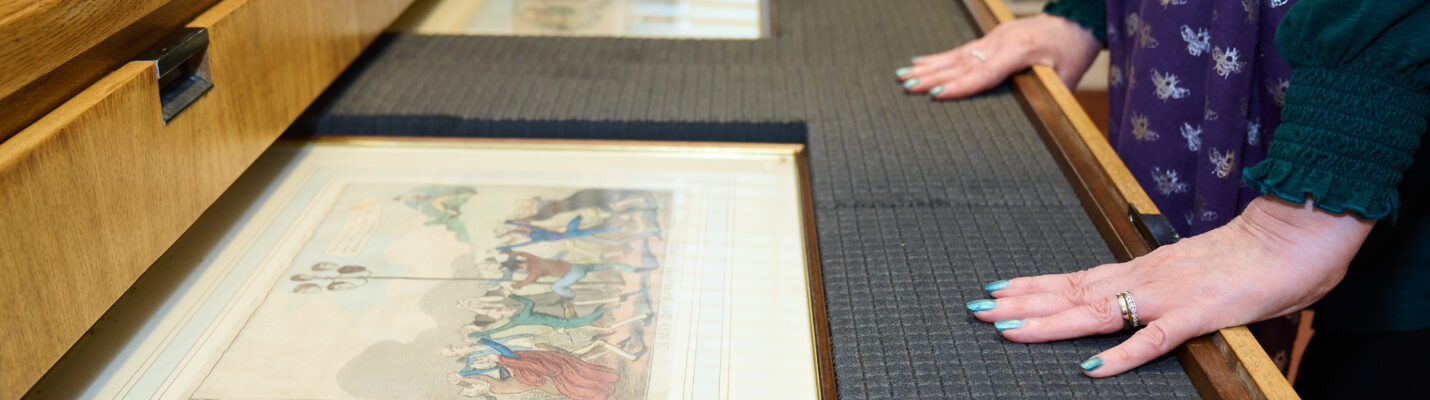
Individual rarities include first editions of Paine's Rights of Man (1791) and of John Wilkes' Controversial Letters (1771) and Speeches (1777), the broadsheet signed by Henry (Orator) Hunt announcing the meeting in St. Peter's Fields which led to Peterloo, 1819, and a contemporary calico headscarf depicting the "massacre'; the report of the trial of Orator Hunt by the Chairman of the Magistrates, William Hulton, with Hulton's hand-written notes (1820); sets of early radical journals, Cap of Liberty, Poor Man's Guardian, Cobbett's Weekly Political Register. The State Trials are in full, dating from the 1790s.
Irish history is represented by major deposits bequeathed by historians Desmond Greaves and T.A Jackson, and is strong on early history with the Pacata Hibernia (1623), Clarendon's Rebellions and Civil Wars in Ireland (1720), the Annals of Ireland (1856) in four folio volumes translated from the Four Masters of Ireland by Owen Connellan. The folio Report of the Committee of Secrecy on Ireland (1799), time of Wolfe Tone, echoes in its preamble sentiments still heard today: 'In the whole course of their enquiry your Committee have found clearest proofs of systematic design ... to overturn the Laws, Constitution and Government and every existing Establishment, Civil or Ecclesiastical, both in Great Britain and Ireland as well as to dissolve the connection between the Two Kingdoms so necessary to the security and prosperity of both'. There are over 100 biographies of the United Irishmen, the Fenians and leaders of the 1916 Easter Rebellion, pamphlets printed at the time of Robert Emmet's trial in 1803, and 60 books and pamphlets by and about the playwright Sean O'Casey.
Artists are well represented from the late eighteenth century, through Cruikshank and Rowlandson to Walter Crane, Will Dyson, Low, J. L. Horrabin and Harold Riley, the Salford-born painter. Commemorative mugs, plates and other ceramics, suffragette badges - and a medal presented to a suffragette who survived a hunger strike - add to the decor and give the exhibition and reading rooms a more material feel. Large ornate trade union banners festoon foyer and staircase.
Another move to ensure lasting support and continuous assistance was made in 1987 with the formation of the Friends of the Library. At the time of the 1997 General Election the Friends included Tony Blair and 73 other Labour MPs, 12 MEPS, six members of the House of Lords and many individual members of the public, as well as institutions. The Friends, of course, exist to support the objectives of the library and to offer it financial aid and exert what influence they can on its behalf. They are most visible in print when the annual Bulletin is published, a bulky and attractive journal which contains articles researched by Friends out of the resources of the collections. Eddie and Ruth Frow are themselves prolific authors, Eddie doing the research, Ruth the writing. Examples of their publications are: Chartism in Manchester 1838-1858; Red Poets; Political Women; The New Moral World: Robert Owen and Owenism; The Politics of Hope: The Origins of Socialism in Britain 1880-1914.
Nor has their industry been overlooked. Manchester University bestowed the degree of MA on Eddie, Salford University the same degree on Eddie and Ruth. The Library Association awarded its Commendation of Merit to both in September 1989, in recognition of distinguished service to the library profession in creating "the world's foremost library on the working class movement', a library which, the citation adds, 'documents the ideals, aspirations ... and organisational triumphs of ordinary working people'. In 1996 on his 90th birthday, Eddie was the guest at a reception in his honour held in the splendid Victorian Gallery of Salford Art Gallery, an occasion of deep emotion and a reunion of a multitude of friends and supporters from industry, politics, academe and the trade unions.
One of the chief delights in working as a volunteer in this buoyant enterprise - as vigorous as ever despite the apparent setbacks to the pioneer socialist ideals in recent years - is the evidence of that sturdy tradition of self-help which characterized the proletarians from Lancashire and elsewhere. Many such clues slip from the books and pamphlets which come under one's eyes during sorting and cataloguing the plentiful donations which are now a principal source of accessions: a bus ticket from prewar days in the original Left Book Club edition of Orwell's Road to Wigan Pier, a scribbled note in the flyleaf of a biography of Philip Snowden by someone who knew him, a newscutting from a paper in 1890 found inside an early (1814) edition of Burns' poems reporting the discovery by a shepherd of the first Kilmarnock edition of Burns in a rock cleft on an Ayrshire hillside. Vivid mementoes of attachment to a literary tradition are the signed copies of local, humbler poets in dialect verses, or in thin replicas of nineteenth- century romantic effusions. These unsung, anonymous readers and composers were not always finely discriminating in the formal Scrutiny sense but the instinct was there, proved in their benefactions now augmenting Eddie and Ruth's foundation.
With its riches continually replenished by donations as well as through the systematic search for relevant materials, the Frows have their memorial. The WCML will be a perpetual landmark in Salford, a tribute to its only begetters and the subjects it celebrates. The Frows are a modest couple who see the cause as far more important than their own personalities; they have always sunk themselves in the work, in creation. Always in view is their aim, reading, collecting and publishing the lessons of history, not simply to understand the past but in Marx's words, to change it.
Further reading
Frow, E and R. (1986) ' Travels with a caravan ', History Today, Vol. 2, Autumn pp. 177-82. A vivid account of their life on the road. The commentary on bookshops and the directory of such establishments is required reading for any librarian/bibliomane.
Kahan, A. (1988) 'Interview with Eddie and Ruth Frow', North West Labour History, Vol. 13, pp. 3-23. As Kahan says in summarising the library: 'The movement can be seen in its unvarnished complexity, contradictory, confused, betrayed, but indefatigable'.
Knight, G. (1983) 'The Working Class Movement Library, Manchester', unpublished MLS dissertation, Loughborough University of Technology.
Knight, G. (1989) ' The Working Class Movement Library ', Manchester Regional History Review, Vol. 3 No. 1, pp. 82-5.
Since this article was completed, sadly, Eddie Frow has died, not long before his 9lst birthday. He is, of course, dead only in the corporeal sense. In every other sense he will live on, in the rich collection assembled with such devotion by Ruth and himself, and in the minds of its users, now and in the future.